











1/11
WordPress design
Custom WordPress builds on a 5-year hosting agreement
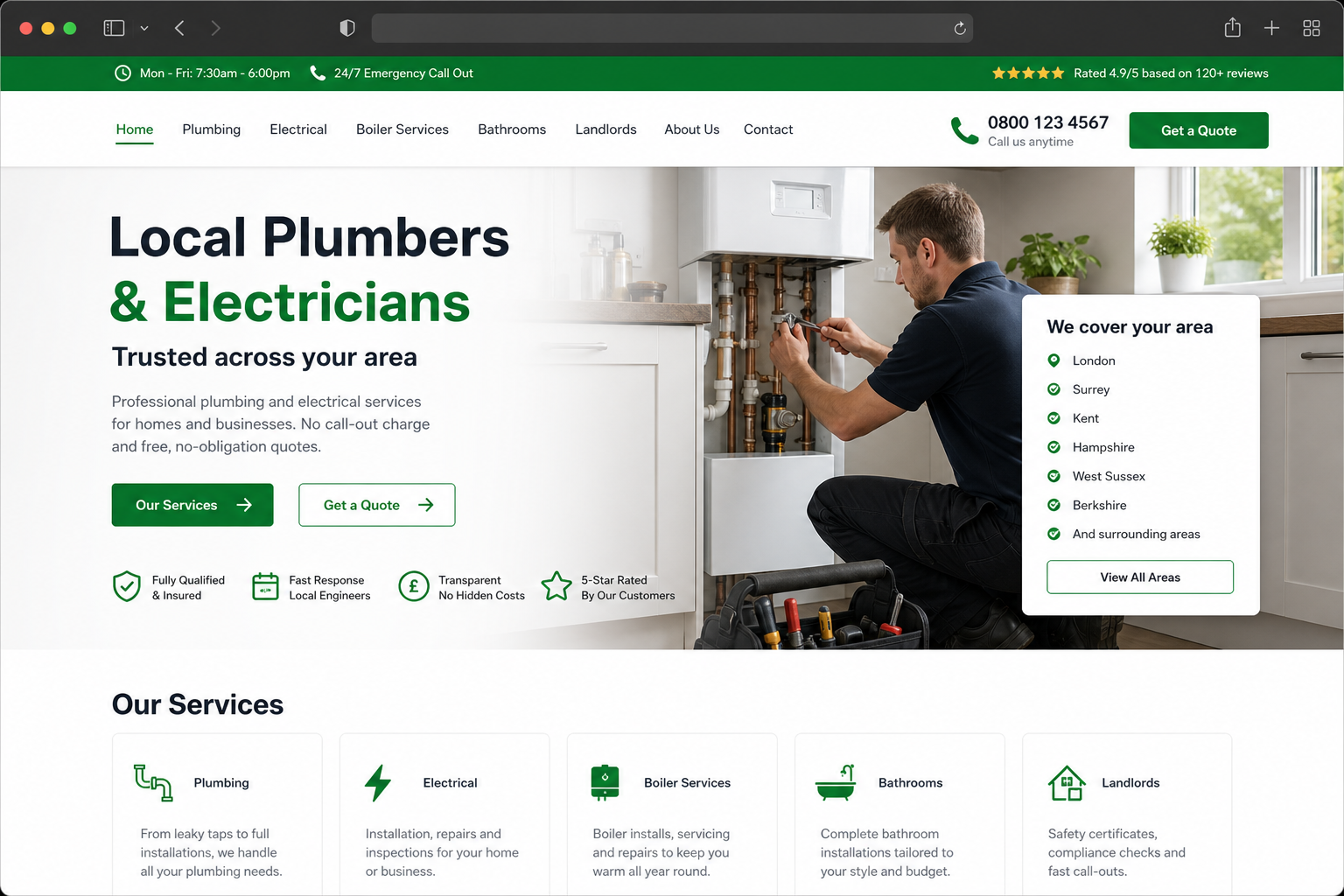
Trades & home services — emergency call-out, service grid, local trust signals
View WordPress design
Nano & Micro entry
Apps+OS from £5.33/mo — WordPress eligible
Small — 3 months free
Most popular starter — trial on new accounts
Scale plans
X-Large through 16X-Large for growth clients
Professional mailboxes
Webmail on your domain — monthly and annual plans
Uptime monitoring
External checks and alerts before customers notice
1/11
WordPress design
Custom WordPress builds on a 5-year hosting agreement
Trades & home services — emergency call-out, service grid, local trust signals
View WordPress design

1/8
Custom development
Bespoke sites, apps, and integrations
Ecommerce retail — product discovery, merchandising, and checkout-ready layout
View Custom development
The first question most clients ask is not what it costs. It is how long it will take. There is usually a launch event, a trade show or a funding round sitting in the calendar, and the website needs to be ready before it.
The truthful answer annoys people, because it starts with two words nobody wants to hear. It depends. But it depends on things you can actually influence, so it is worth understanding what they are.
A simple brochure site for a plumber is not the same project as a booking platform for a clinic. One might take a fortnight. The other could run for months. The size of the build, the amount of content, and how quickly decisions get made all pull the timeline in different directions.
Here is the part agencies do not always say out loud. The biggest variable is rarely the design or the code. It is how fast the client supplies content, gives feedback and signs things off. A project can sit idle for weeks waiting on a paragraph of text or a single approval.
Most website builds move through the same recognisable stages, and each one asks something different of you.
Discovery comes first. The team learns what the business does, who it serves and what the site has to achieve. Your job here is to be available and honest about goals. A vague brief at this stage costs weeks later.
Design follows, turning that understanding into layouts you can react to. The faster you give clear, consolidated feedback, the faster this moves. Scattered comments arriving over ten days are the enemy of a tight schedule.
Then comes the build, where the approved design becomes a working site. Content gets poured in, pages get assembled, and the thing starts to feel real. Testing and launch round it off, checking the site behaves across devices and browsers, which the MDN guide to responsive design treats as a baseline rather than an extra.
For a content managed site, much of the build sits on a platform like WordPress, and the official WordPress documentation is a good window into how that side of the work fits together.
Almost every delayed project shares the same handful of causes, and content is top of the list. Words, photographs and product details take longer to gather than people expect, and design cannot be finished around copy that does not exist yet.
The second great delay is feedback that arrives in pieces. When approval needs five people in a room and they are never free at once, days quietly disappear. Naming one decision maker early is one of the cheapest ways to protect a timeline.
Scope creep is the third. A site that grew a shop, a members area and a blog halfway through was never going to land on the original date. New ideas are welcome, but each one moves the finish line, and that trade off should be said plainly rather than absorbed silently. Keeping a lean set of pages also keeps the site quick, a point laboured for good reason in Google's learn web performance material.
For a straightforward marketing site of perhaps five to ten pages, with content mostly ready, a realistic window is three to six weeks. Discovery and design take the first week or two, the build takes another week or so, and testing and revisions fill the rest.
Stretch that if the content is not ready, if photography needs commissioning, or if approvals run slow. None of those are failures. They are simply work, and work takes time. Building in a little slack beats promising a date you then have to apologise for.
It also pays to keep half an eye on performance from the start rather than bolting it on at the end. Google's guidance on building fast, modern sites and the MDN web performance docs both make the point that speed is a design decision, not a final polish.
Once a site needs to take payments, manage stock or behave differently for logged in users, the timeline changes shape. You are no longer arranging pages. You are building software, and software needs specification, testing and a longer tail of refinement.
An online shop commonly runs from two to four months, depending on the number of products, the payment and shipping rules, and any integrations with stock or accounting systems. A genuinely bespoke application can run longer still, because edge cases that nobody mentioned in the brief surface during testing.
These projects reward a clear specification before anyone writes code. The more precisely the behaviour is described up front, the fewer expensive surprises appear later. If your build leans this way, our custom development service starts from exactly that kind of detailed scoping conversation.
Security testing also belongs in the schedule for anything handling customer data or payments, and the time it takes is rarely wasted. The WordPress developer resources cover the platform side, while a fast, well hosted foundation through something like managed WordPress hosting keeps the launched site quick without extra engineering at the end.
So how long does a website take? Long enough to do properly, and shorter if you turn content around quickly, name a decision maker, and resist the urge to add one more thing the week before launch. Get those three right and almost any timeline becomes achievable.

Web Design
Redesigns rarely stall on the design. They stall on the words and pictures that were supposed to be ready weeks ago.

Web Design
Both routes can produce an excellent website, so the right answer depends on what you are building and who has to maintain it.

Web Design
Quotes for the same website can swing from a few hundred pounds to five figures. Here is what actually sits behind those numbers.



Comments